Monday, April 6, 2020

Milk vanilla sponge cake


In a sauce pan pour half cup milk , add 60 gram butter and heat it till the butter gets melted and the milk starts to boil.

In a mixing bowl  put 2 eggs and beat. Gradually Add 1 cup sugar too. keep beating until it increases in volume and light in texture. Take 1 cup Maida add 1 Tsp baking powder and sift together. Combine this with the wet mixture slowly adding into the mixing bowl. No need to beat combine it with a spatula.Add 1 Tsp Vanilla essence and gradually add boiled milk too. pour the mixture into the greased pan and bake for 30/45 mints on180 degree hot oven. check with a stick (whether its done) inserted in the centre of the cake.

Recipe courtesy Manjari's Recipe


Monday, March 23, 2020

chukku kaappi kerala style


This is a medicinal drink and can sip on during winter/ monsoon time when you have a common cold, cough or sore throat. You will get an instant relief.
Even though instant ready to make powders are available on the market, I prefer to make chukka kapi with my own traditional method which I got it from my amma and ammumma.

In Tamil houses too they prepare this and they add coffee powder and elaichi. Sukku coffee has been used as a remedy for everything from digestive issues to the common cold in tamil households for centuries.


Preparation:

Water   : 2 and 1/2 ( I measured with steel glass)
Dry Ginger Crushed with mortar and pestle  2 Tablespoon
Cumin / Jeera Crushed 1Teaspoon
Black Pepper 3/4 Teaspoon
Tulsi leaves 4-5 nos
Jaggery syrup Concentrated 2 Tablespoon Instead you can use chakkara / karuppetti too

Heat water in a sauce pan. Bring it to a boil. add all the ingredients to the boiling water and reduce the flame. Stir occassionally. Let it boil for 10-15 mints. (The key is if you want to make 1 cup take 2 cups of water and let the 1cup of water boil and evaporate then the remaining 1cup of kappi will be very tasty and will contain with the very essence of all ingredients. ) Strain it and drink it hot.


Wednesday, March 18, 2020

Rasam


"Rasam seems to have triggered some renewed interest of late.


‘Rasam’ is a southern Indian common liquid food item consumed by people from all sections of the society.


Tradition has it that a Brahmin priest came up with this formulation to cure a Pandya prince who was suffering from an ailment that could not be cured with any then known medicines.


Rasam in Sanskrit means ‘essence’.In Vedic literature, rasa is the living fluid essence - from the breast milk through clarified butter to the juice of the fruits - rasa is the very essence of life.
n the culinary context then, rasam becomes a very important component in Indian meals."


Ingredients:


Tamarind Lemon Sized

Make a pulp first by adding hot water and after some time add more water and strain it. Keep it aside.


For grinding:

Coriander powder 2 teaspoon

 Whole Black peppers 6-7 no.s

Cumin Seeds jeerakam 2 teaspoon

Uluva ( fenugreek seeds) – ½ teaspoon

Turmeric powder 1 teaspoon


For sauting

Coconut Oil

Onion chopped 1 meddium sized

Garlic  1 big chopped

Green Chilli Chopped 2

Tomato chopped  1 medium sized

Salt to taste

Hing A pinch

Dry Red Chillies 2 nos

Curry Leaves

Mustard Seeds


For Garnishing:

Coriander Leaves (Chopped)


3 Cups of water

1 tsp Jaggery


Preparation :


Grind along all the ingredients like coriander powder black pepper cumin seeds fenugreek seeds and turmeric powder.

Heat coconut oil in a pan and season it first with mustard red chilly curry leaves. Once the spluttering stops, add chopped onion green chilly garlic and sauté it till it becomes brown. Add chopped tomatoes too. Saute it and after sometime add grinded masala powder too after reducing the flame, stir it well then add in 3 cups of water along with tamarind juice which is strained well,

Please add a liitle bit of jiggery too to adjust the taste. Put hing, let it boil for some time and add coriander leaves when it’s done. Serve the rasam hot if you want more spicy you can sprinkle pepper powder on top of it.


After a heavy meal, you can drink a glass of rasam for easy digestion. Immediately your stomach will be light. Also its very good for your throat and its highly recommended during winter for boosting the immunity..

Thursday, January 9, 2020

Thiruvathira Puzhukku --- Kerala Traditional Recipe


Thiruvathira  (Arudhra Darsinam ) is a Festival celebrated in kerala on the month of Dhanur masam (Margazhi masam). There are many mythical stories associated with Thiruvathira.
Thiruvathira
An observance called Thiruvathira vrutham (Noyambu) is kept by women on this auspicious day. Vrutham starts on Makayiram day after offering Ettangadi to Lord. They skip rice and only eat ettangadi, koova verukiyathu Puzhukku or wheat preparations. Women wear traditional kasavu set mundu and adorn their tied hair with medicinal flowers Dashapushpam.This practice is called paathira poo choodal. The morning bath in the pond during the season while the climate is extremely cold make the women's body cool and composed.
Thiruvathira kali is performed in the night in traditional homes with Thiruvathira pattu

Ettangadi is different from puzhukku, almost all the ingredients are same but ettangadi is prepared in sharkkara pani and also add dry coconuts. In ettangadi preparation Eight different tubers are roasted in the fire first before cooking. Through this ritual, it is believed that Kamadeva's body represented by the tubers is regained.

 Here I am posting the recipe of Thiruvathira puzhukku.


 Ingredients :

Black chana (kadala)     ½ Cup  (Soak it overnight)

Red cow peas (van payar Red in color)  ¼ Cup (soaking for 4 Hrs. recommended)

Horse Gram (Muthira)     ¼ Cup (soak it along with Red peas for Hrs.) 

Elephant Yam (Chena)     800 gram approx. Half portion of the medium yam

Kachil / Cheru chembu  (coloccasia)    2 or 3 small 
Tapioca and Sweet potato    1 each

Raw Banana-1

Koorkka  big  5 nos

Salt to taste

Turmeric powder   as needed

        For seasoning:
Curry leaves- 3/4twigs
Coconut oil 


         For Grinding:


Green chilly-4
Grated coconut-1 whole coconut
Cumin seeds-1 tsp

 Method of preparation:


Pressure cook black chana (which is soaked overnight) with little salt and sufficient water till 5-6 whistles on medium flame.
Later Pressure Cook Red peas and horse gram together with little salt and sufficient water for up to 2-3 whistles. In case if we have extra water in black chana we can use it for cooking pigeon pea.
In the meantime, blend grated coconut cumin seeds and green chilly.  (do not add water)

Clean and peel all root vegetables and soak it in a vessel containing water.
Cut all the vegetables into cube pieces. Since elephant yam has got more cooking time, take care to cut into smaller size than the other vegetables. Cook all the vegetables in the same vessel in which we cooked Red pea and horse gram so that the left over water can be used for further cooking and can add more water only if required. Salt and turmeric powder can be added too. (in traditional way of cooking we don’t add red chilly powder instead we use green chilly) Cook all the vegetables till done. Add cooked black chana to the vegetables. Stir it occasionally and add coconut thick ground paste too. Cook on low flame till the raw flavor of the coconut is gone and put off the flame. Season it with fresh curry leaves and pure coconut oil. Thiruvathira puzhukku is ready to be served. We should occasionally prepare it since it’s a healthy recipe and also we are using the seasonally available (no hard and fast rules) vegetables.


Wednesday, June 5, 2019

Uzhunnuvada South Indian Meduvada


This easy and crispy vada recipe is from my friend Jayasree.

Ingredients Needed:

Urad dal (Uzhunnu parippu ) : 1 cup
Rawa            : 3 tablespoon
Green chilly   :3- 4 nos.(finely chopped
Ginger           : 1 inch piece (finely chopped)
Curry leaves  : 1 sprig (finely chopped0
Black Pepper : 10 nos (crushed) 
Salt to taste
Hing (Asafoetida) : 1 pinch
Coconut Oil to fry


 Preparation:
Soak urad dal for 2 hrs. Grind the urad dal In a grinder without water (sprinkle very little water if needed and finding it difficult to grind with no water) The idea is to get a thick paste which is fluffy and smooth. 
In a vessel combine this batter with all other ingredients using your hand. Adding Rawa or semolina helps to absorb the excess water in the batter so that vada will be crispy and oil free unlike restaurant vadas which absorbs too much oil while frying. Keep the batter covered for some time for setting.
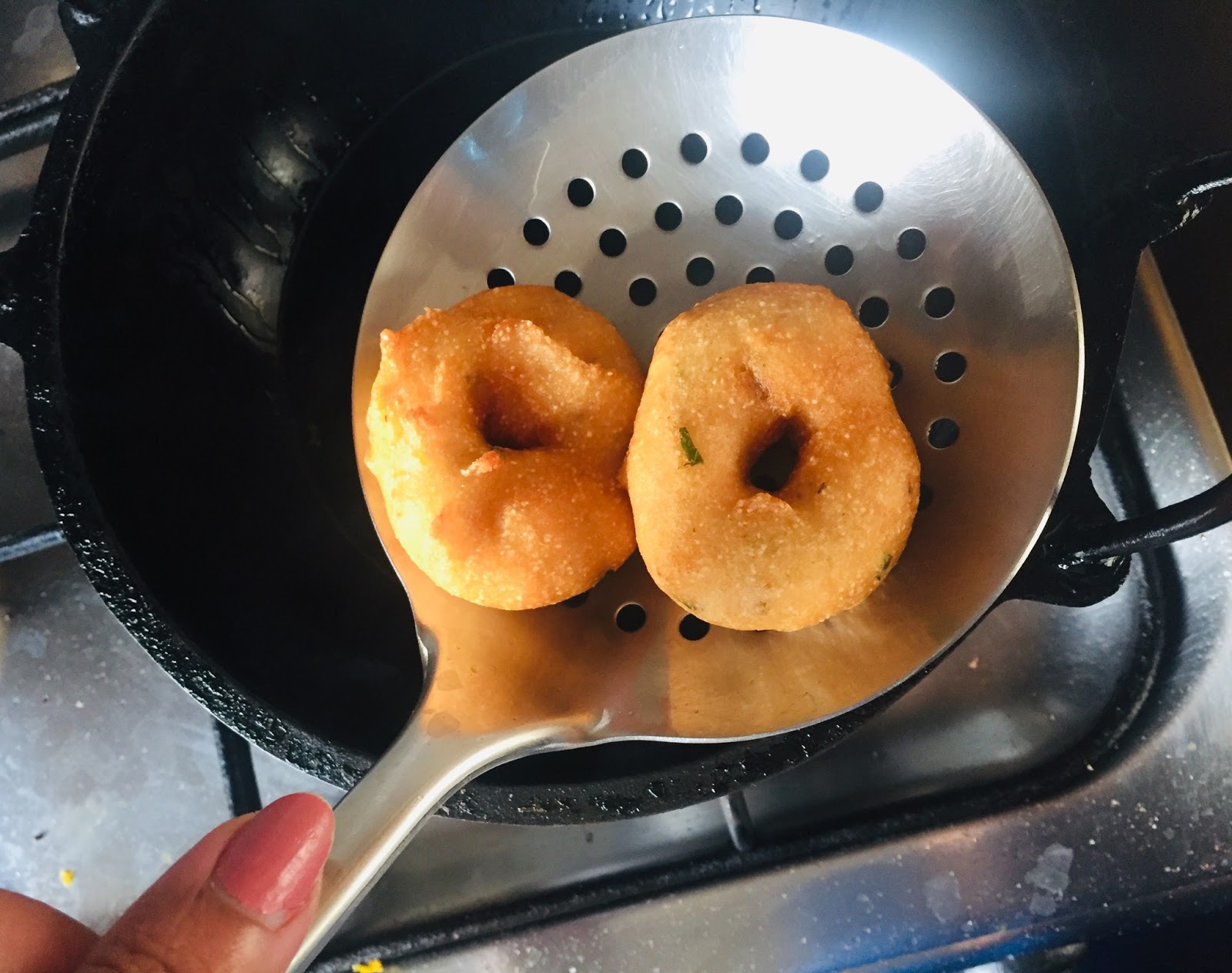
Heat Oil in a kadai.Shape the vadas using your palm from a round shape to flat with a hole in the middle; wet your palm in a vessel which is full of water before shaping. this will prevent sticking of the batter and can shape without much fuss. Slide it  carefully into the hot oil in the kadai.Fry it till you get a golden brown and lay them out on a plate which is lined with tissue. Have  hot  vadas with either sambar or coconut chutney.


Tuesday, April 9, 2019

Polish your Brass and bronze vessels and lamps in a natural way


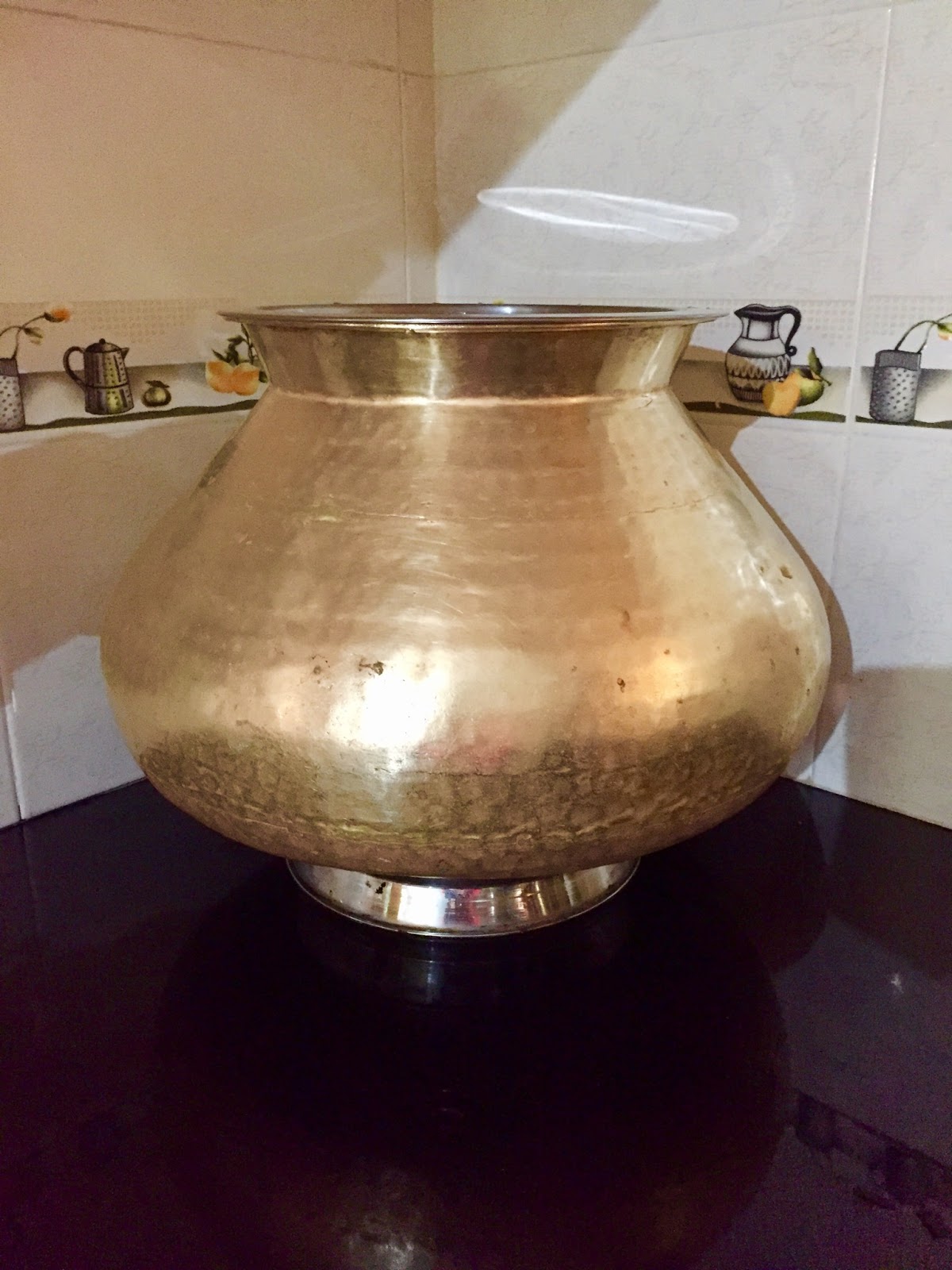
In kerala we have a tradition of keeping Brass and Bronze vessels and lamps always polished even though not in use. majority of these are passed onto us through our ancestors. I have some too inherited from my Mother In Law's Collection. she always used to keep it shiny and bright by cleaning it with natural ingredients. Its a must  that when vishu or Onam or any festival approaches , this should be polished and keep it presentable. its a ritual still in many houses in kerala.


How to clean these vessels in a Natural way without using any chemicals?

Take a lemon sized tamarind. Add water and make it a thick pulp add some rock salt too.
Scrub it on the vessels nicely. keep it for some time. (Do not keep it for long time since patches would appear ) Wash it thouroughly  with running water and wipe it with a dry cotton clothe. If tamarind is not available you can use lemon too. Scrub lemon along with some salt instead of tamarind. you will get the similar result. In kerala we use irumban puli  (bilimbi)too for polishing the brass. but should be riped one.

Lately some of my friends have started using chemical ingredients buying from the shops. I have never bought or used these chemical ingredients for cleaning the brass vessels.  I.Am doing it in a natural old fashioned way and it shines bright too.


                                                This is Tamarind and irumban puli respectively,


Sunday, February 17, 2019

KERALA PAL PAYASAM (MILK KHEER )

With this post, am starting a new series NALA PACHAKAM. I have many male friends who are very good at cooking. Hence I thought of  accommodating their contribution as well in my blog. This special payasam recipe is from my friend Madhu. He has shared a few tips as well for making the payasam more delicious. Since i was so keen to share traditional tips, with so much patience he had shared  the same. Thank you so much Madhu for sharing this wonderful recfipe.
I prepared this as Naivedyam since palpayasam is a favorite prasadam for lord krishna and Naga devatas.


Ingredients 
Unakkalari  - 1 cup
Milk            -  3 Litre
Sugar          -   1 cup or 1 1/4  cup(Depending on your taste)
Kadali pazham (small plantain kerala) - 2 No,s
Tulsi leaves   - 1 Kizhi (bundle)

Preparation 

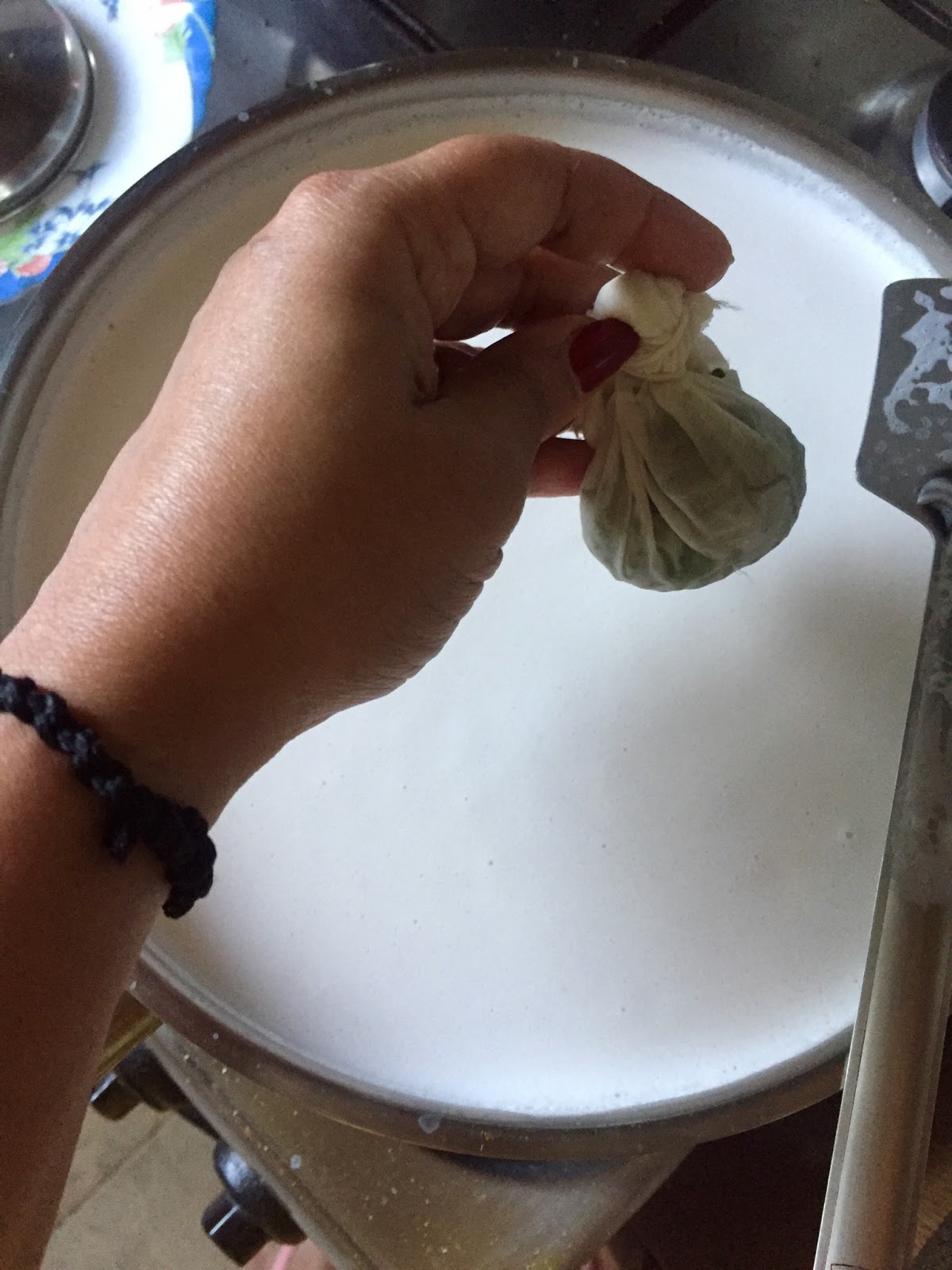
Thoroughly wash the rice, drain and keep it aside. In a heavy bottomed pan, (back in kerala we use brass uruli)  pour the milk and bring it to boil on a low flame. Add the rice in the boiling milk and let it cook on a low flame again, continuously stirring with a spatula, will take time more than one hour. we have to be patient. At this time take a handful of fresh tulsi leaves and place it in a small tidy cotton cloth and make a bundle in malayalam we call kizhi . and put the same in boiling payasam so that the essence and flavor of the leaves will get absorbed into the payasam giving a divine taste. once the rice is cooked well, sugar can be added. Never before because there is always a tendency to harden the rice if we add sugar before its cooked properly, Its time to remove the vessel from the stove when it gets a pale pink colour . and check the constituency as well,
Take two kadali pazham peel it and  cut in to small pieces and grind smoothly in a grinder along with a tablespoon of sugar. Add this paste in the payasam and stir well. This adds a unique taste to the palpayasam especially if we are  preparing it for Naivedyam. Remove the kizhi from the payasam after squeezing it.

Keralites will always have the tendency to compare  the taste with the tastee from prasadams we get from ambalapuzha and Guruvayoor  which is heavenly by all means.


Unakkalari 
If we strictly follow the customs and traditions, we are not supposed to prepare prasadam or neivedyam with white raw rice since its used exclusively for shradham related rituals. Madhu shared this traditional tip and I personally agree with it/. I also stopped using white rice and instead i am using unakkalari which i am bringing it from kerala. In UAE i dont think its available but as a substitute we can use Srilankan Red rice which is available in flour mills here. we will get almost the taste of unakkalari. Hope you will notice this tip next time when you prepare neivedyam.

                                                                  Unakkalari Picture
Also in the final stage we are adding kadalipazham smooth paste for a Unique taste
Kadali pazham is the real king in fruits with immense health benefits, No wonder why its being offered to our deities.